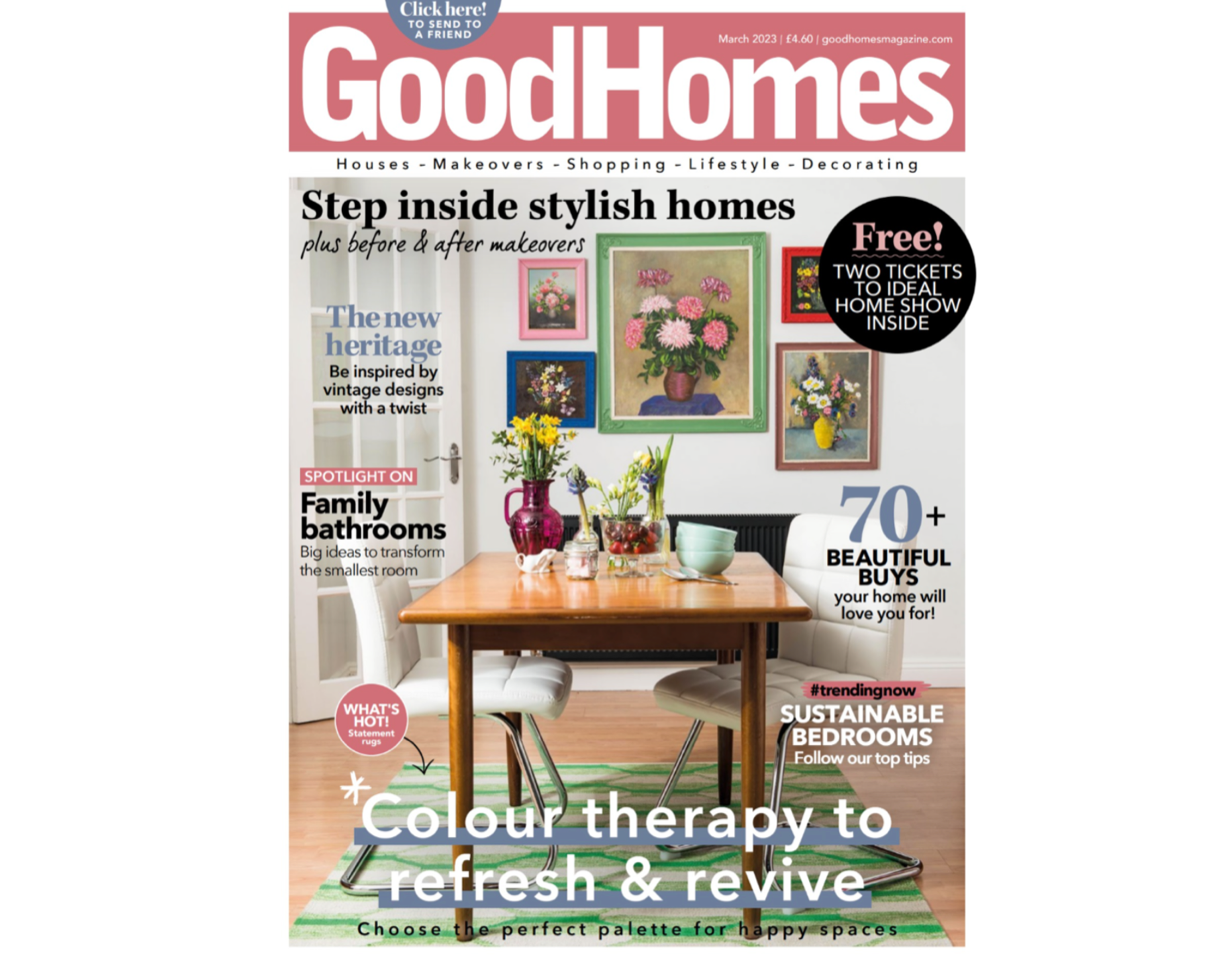
We’re delighted to be featured in Good Homes magazine this month.
The March 2023 edition, features the beautiful home of one of our clients based in West Bridgford, Nottinghamshire. Nye and Emma bought a four-bedroom, 1920s detached house that needed extending and modernising for their growing young family.
We designed a rear extension to the property in a contemporary style that complemented the heritage of the building. We reconfigured the space to allow more natural light into the home and created a fluid airy flow throughout. Black stained timber was used on the exterior to create a striking contrast with the original brickwork.
As with all of our projects at Design Haus, we used virtual reality throughout the design process so that Nye and Emma could contribute to the design in real-time. They were able to move elements of the design around as they wished.
At Design Haus, we love seeing our architectural designs featured in prestigious home design magazines such as Good Homes. Thank you to our clients for sharing their beautiful home and to Beautiful Homes in the North for their fantastic work on this feature.
What are the benefits of using Virtual Reality within Architecture?
Our Design Haus founder, James Brindley, first encountered the benefits of using virtual reality within architectural design over 4 years ago. As a result, we were one of the first architect firms in the UK to use VR within our residential design process. We have been refining our offering and investing in cutting edge technology ever since.
We use 3D visualisation via VR technology and other innovative presentation techniques throughout each project. This offers collaboration with our clients in a real-time environment and enables them to contribute and visualise how that idea could look. This involves moving walls, changing roof designs, specifying materials and amending furniture layouts.
Our homeowners can collaborate and bring their ideas to the table at every step of the way. Alongside experiencing the design in its entirety before construction even begins.
We offer this VR architectural service to clients across the East Midlands and overseas. Our local clients can visit our offices in Nottinghamshire, where they can experience first hand their new home in VR. For our clients further afield we can offer these technologies remotely.
What are the benefits of using Virtual Reality within architectural projects?
Virtual reality removes the guesswork from the design process. Clients are able to explore the proposed design from within, rather than simply imagining the end result.
Everything from lighting solutions to changing weather can be simulated within the virtual space, producing a realistic representation of how the building will function once complete. We can specify different materials to see how they change the look and feel of a room, as well as incorporating interior design choices such as furniture and decoration.
Taking advantage of VR allows clients to make informed decisions and specify any necessary design changes before construction begins. This reduces the need for expensive or last-minute alterations; saving time and money on the project.
We work with you to ensure the spaces we create match your lifestyle. We can assist with furniture design, layouts and tonal and material specification to create truly personal spaces.
Using VR not only benefits our clients but also other businesses working on the project; from the Planning Officers, Quantity Surveyors, Engineers to Construction Professionals. Our use of VR and 360° scenes allow all parties to see exactly what has been proposed. This avoids any ambiguity and helps to prevent costly mistakes for those involved as well as encouraging a much smoother process.
How can virtual reality help the planning stage of an architectural project?
When submitting architectural plans for approval, especially for a listed building or one within a conservation area, it is critical that the conservation officer can clearly understand the plans being proposed.
There have been many times when our use of VR technologies have contributed significantly to the success of a project.
On a recent project we modelled the entire plot of a listed building in 3D, including boundary walls, topography of garden and surrounding structures and trees. The proposals were designed through collaborative design work with the client (using VR). These were issued to the planning officer via a web link, allowing the conservation officer and planners to visualise the scene in VR using their own phones.
This ensured the proposal was clearly understood as we were able to present the finished project as it would be seen in real life, allowing the planners to assess its impact on the existing listed building and surrounding area. The Conservation Officer was highly complimentary of our approach and supported the proposals for approval.
How can virtual reality help the construction stage of an architectural project?
Showcasing our designs to the construction company via 3D ‘real time’ modelling and VR scenes enables them to also visualise the design in the clearest possible way.
Construction companies frequently tell us that our use of VR greatly assists their planning process. It allows them to visualise and more easily engage with the scheme. This often raises unforeseen issues and queries which can be managed and resolved far more quickly than if they were discovered during construction.
What do our clients think about our use of virtual reality?
Our clients unanimously say that our use of VR dramatically improves the whole collaborative design process as well as the finished design. This is shown in our excellent client feedback on Houzz and Google reviews. We are extremely proud of our high customer satisfaction and our client referrals.
“We were initially astounded at the 3d model of our property which enabled us to see how the design would work with the rest of the house. However the best was yet to come. A virtual 'walk through' of the design, using the VR headset enabled us to see sunlight entering into the room and to appreciate the sheer scale. This is a fabulous USP that James has that you only ever see on the property shows on TV.”
West Bridgford, Nottinghamshire project
How will virtual reality in the architecture industry change in the future?
Virtual reality technology and 3D visualisation techniques are continuously improving. The VR experience is becoming more aligned with reality. As a company we are focused on embracing these technologies and offering them to our clients wherever we can.
The benefits of using virtual reality in Architecture are only just becoming more widely acknowledged. We are extremely proud to be at the forefront of offering this exciting technology to our clients.
If you would like to see how Design Haus could use virtual reality to assist your architectural project, please get in touch.
We are thrilled that for the second year running Design Haus Architecture has been awarded, 'Best Residential & Small Commercial Designer' at the LABC Building Excellence Awards for the East Midlands.
These awards celebrate outstanding projects and individual contributions in the construction industry, within each of the 12 regions in the UK. There are various categories to these awards, across residential, non-residential, public and community buildings.
"The awards focus on the very best in technical innovation and construction quality, helping to raise the level of construction quality across England and Wales."
LABC Building Excellence Awards
As a regional winner, we are delighted to have been also shortlisted as a finalist in the LABC National Grand Finals. This event will showcase the winners across all regions and then award a national winner on the night. The National Grand Finals will be held at the Park Plaza Westminster Bridge, in January 2023
The Local Authority Building Control (LABC) represents all local authority building control teams in England and Wales, and we are delighted to be awarded such a prestigious award. Follow LABC's news and updates on LinkedIn.
If you would like to learn more about how we could assist your residential or commercial architectural project please get in touch - we'd love to hear from you.
We are delighted that Design Haus Architecture has been shortlisted for a Building Innovation Award.
We are a finalist in the ‘Best use of Augmented Reality or Virtual Reality in a Construction Project’ at the Building Innovation Awards 2022.
These awards recognise and celebrate those individuals and organisations that embrace emerging technologies in the construction sector. Commenting on the awards, editor at Build in Digital, Siôn Geschwindt, said:
"It's impressive to see the calibre of this year's finalists. These projects, people and technologies represent the future of construction in the UK. We look forward to presenting the winners on the night and welcoming you all to an event that promises to be a night to remember!"
We use virtual reality and emerging technologies across all of our residential projects - so it’s fantastic that this has been recognised and to be a finalist is a huge honour for us!
We are very much looking forward to celebrating with all the other finalists at the awards ceremony in October.
If you would like to know more about how we use Virtual Reality in the design process of our architectural projects, please get in touch with us. We’d love to hear from you.
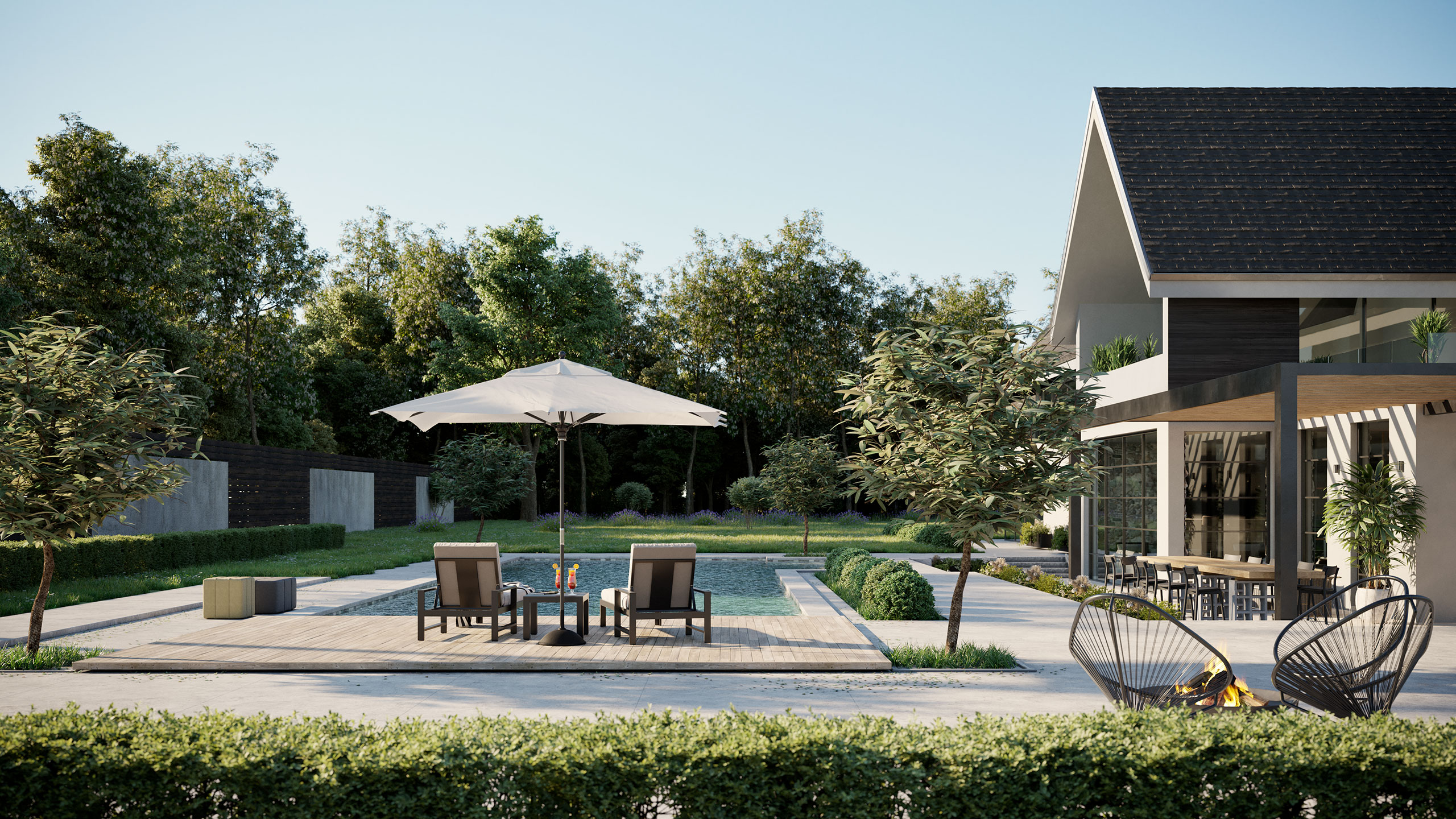
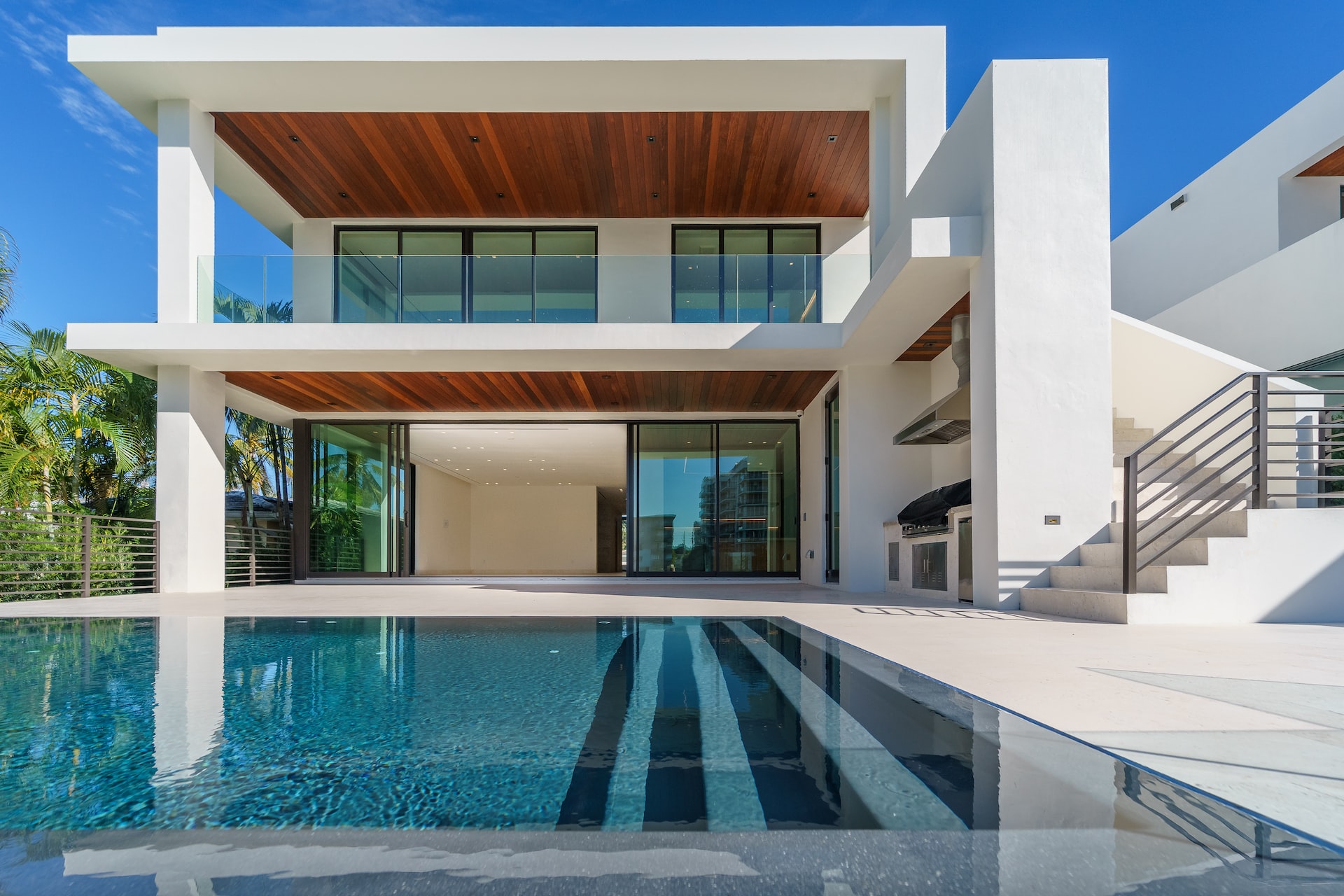
A swimming pool can be a wonderful addition to any home, adding relaxation and luxury while increasing the value of your property. But do you need planning permission to build a residential swimming pool?
Whether or not you need planning permission for your swimming pool will factor into the cost, design and lead time of the project, so it’s important to find this out before you get started on the process. This will help you to make sure that the pool of your dreams is viable, and highlight any issues that you may need to avoid.
In this article, we’ll take a look at a few different types of private swimming pools and the planning application requirements of each, giving you a better idea of what to expect for your own project.
Do indoor swimming pools need planning permission?
Planning permission for indoor pools is usually not necessary in the UK. However, as with all construction projects, there’s no black-and-white answer, and each case must be reviewed individually.
Here are some different types of indoor swimming pools and their planning permission requirements.
Pools in external buildings
Swimming pools housed in an external building, often known as a pool hall, are classed as an outbuilding. This is a Class E permitted development for householders and usually doesn’t require planning permission as long as the building adheres to certain restrictions.
Some of these building restrictions include:
The building must be a single storey
The building must not include verandas, balconies or raised platforms
The building must not cover more than half the area of land around your house
You can read the full guidance on the Ministry of Housing, Communities & Local Government website.
Subterranean pools
Building an underground pool is a great way to expand and improve your home if you don’t have much available space. While some basement extension projects are classed as permitted developments, others are not. Your local authority will have the final say on planning permission for subterranean pools, so it’s best to check with them directly.
Pools within listed buildings
As with any major development within a listed building, any type of indoor pool in a listed building will require planning permission before the project can commence. This includes basement pools, which, although they may not be visible from outside, could still drastically change the design, structure and purpose of the building.
Do outdoor swimming pools need planning permission?
For the most part, properties in the UK don’t require planning permission for an outdoor swimming pool, as this is classed as a garden project and therefore a permitted development. An outdoor pool must be uncovered and not surrounded by heated air, which would otherwise classify them as an indoor pool.
Let’s look at a couple of different types of outside swimming pools and their planning permission requirements.
Pools on the site of a listed building
You will almost certainly need planning permission to build an outdoor pool on the site of a listed building. However, this doesn’t mean that you won’t be allowed to build one at all; you may simply have to change the design, size or location of the pool to meet your local authority’s requirements.
Pools within conservation areas
If your property lies within one of the following, there’s a good chance that you will require planning permission to build an outdoor swimming pool:
Area of Outstanding Natural Beauty (AONB)
Conservation area
Designated land
Green belt land
National park
Natural swimming pools
Natural swimming pools are a great option for those looking to embrace the biodiversity of their garden and avoid the maintenance and chemicals associated with standard swimming pools. As with outdoor pools, planning permission is usually not required, unless your property lies within a conservation area. However, it may be easier to get permission for a natural swimming pool than a traditional pool in an AONB, as it will blend in better with the surroundings.
Need help getting planning permission for your swimming pool?
If you’re not sure whether your residential swimming pool project requires planning permission, take a look at the Planning Portal for the national online planning application process.
However, your best option is to partner with an experienced architect who understands the ins and outs of planning permission requirements, and is able to handle the application on your behalf. At Design Haus Architecture, we’ll support you throughout every step of the design and planning process, including working with your local authority to get your plans approved.
We are highly experienced in large residential projects and were recently nominated for Young Architect of the Year at the Building Design Architect of the Year Awards 2022. Take a look at our Newton House project as an example of one of our contemporary designs. We designed this new dwelling in rural Derbyshire to work around the natural path of the sun, with a bespoke swimming pool at the heart of the design.
Alongside luxury swimming pools, we can also assist with designing private spas and gyms, as well as any other bespoke architectural projects. If you’d like to discuss how Design Haus can support the design, planning permission and build of your new swimming pool, we’d love to hear from you. Please get in touch online, email studio@designhausarchitecture.co.uk, or call 0115 678 8917.
We are absolutely thrilled to have been shortlisted for 'Young Architect of the Year' at the Building Design Architect of the Year Awards 2022.
"The Young Architect of the Year Awards is organised by Building Design to recognise and reward the UK's most promising new architects or practices".
Building Design
These prestigious awards, reward architects for a consistent body of work rather than just one-off projects. So we are extra especially delighted that we have been nominated! If you would like to see the work that got us nominated for this award, please head over to our projects section.
One of our projects which was referenced by Building Design was North Road.
"North Road is the conversion and extension of an existing bungalow into a modern four-bedroom home. This project brings together a range of different design ideas which required working within the parameters of the existing structure and site boundary.
The new building was developed almost entirely using virtual reality technology. The client was able to wander through the space in realtime, making suggestions and observations long before the project was submitted to planning. Moving walls, changing materials and creating new moments in the design was achievable within minutes."
We were delighted and honoured to win best 'Residential Project' in the East Midlands at the RICS Awards 2022 this week. These awards held by the Royal Institution of Chartered Surveyors recognise the most inspirational initiatives and developments in land, real estate, construction and infrastructure.
We are thrilled that our 'Feel Good Project' won in the 'Residential Project' category for the East Midlands. The RICS judges described the project as one which,
" Embraces 21st century materials, design principles and sustainability. This significantly new home in the Nottingham countryside provides a first class family home for this and future generations."
We are now looking forward to competing in the RICS Awards 2022 Grand National Finals in October in London.
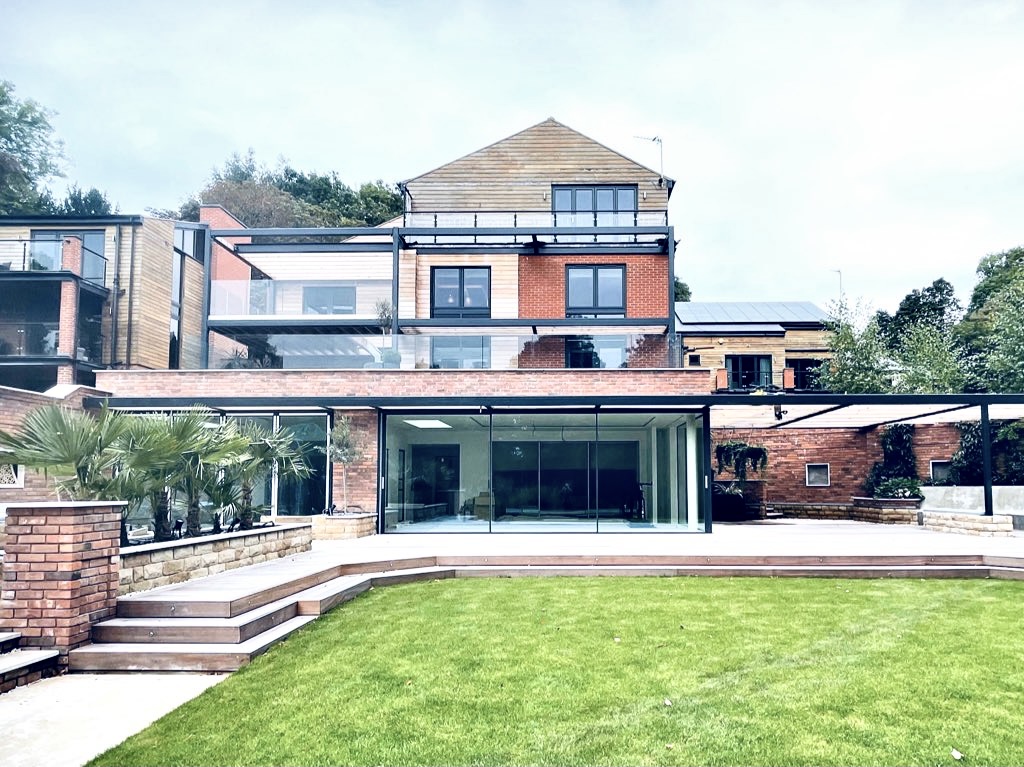
The Feel Good project is a modern home extension of a property located on the edge of a nature reserve. The process not only resulted in an outstanding design but also had a positive effect on the surrounding community.
The Brief
The property is set within an area of outstanding beauty. However, the owner felt he was unable to enjoy the views or access the garden easily due to its outdated design.
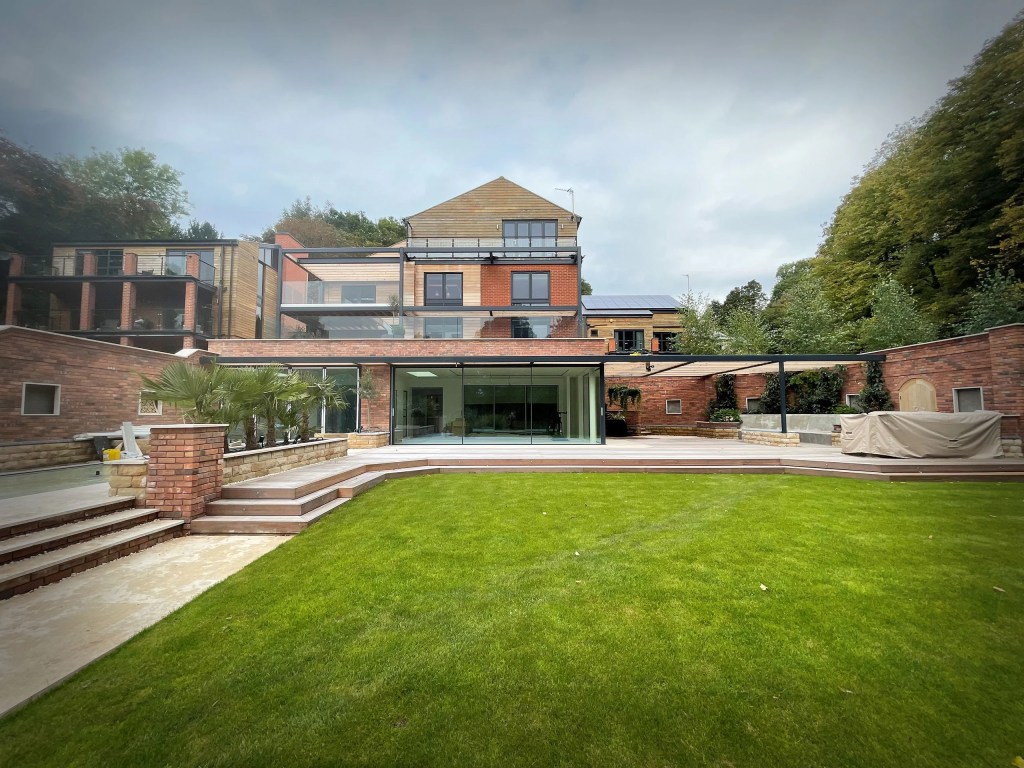
Working collaboratively, we designed a modern extension with floor to ceiling glazing, which would allow the family to pass effortlessly between the outdoor and indoor spaces. A sequence of terraces and roof gardens further enables the homeowners to enjoy different external spaces and zones at different times of day.
With all projects we are mindful that dwellings need to fit in fluidly with the properties surrounding them. We analysed the nature and buildings of the surrounding area and sourced local stone to match the original stone walls exposed around the site.
What We Did
We designed contemporary additions of glass, canopies and an uninterrupted steel framework to create connectivity between the new, yet historically styled, walls. We made careful use of contrasting light and shade, texture and materials.
The rear of the property was completely transformed. What was once a rather tall, overbearing, flat building, it is now an elevation of prominence and elegance which is pleasing on both horizontal and vertical axes.
We gathered design styles and ideas from all over the world, delivering a scheme that is nonetheless cohesive and at ease with its dramatic surroundings. The gradually diminishing width of form makes the property less dominating on the skyline, and the design creates a sense of the building flowing down into the garden and into the nature reserve below.
As a result, the house is now intrinsically connected to the outside through its roof terraces, balconies and stepped access.
Challenges
Access to the site was difficult because the property sits at nine metres below street level, surrounded by steep slopes and trees. We had to carefully plot and plan vehicular access along the winding, steep, private road of the estate; accurate schematic drawings were prepared to ensure cranes could deliver the large items such as steel and glass that were needed for construction.
Prior to work commencing we carried out test-runs to ensure that raw materials could be safely delivered. For certain fragile items we created a platform to bridge the half-metre gap between the bottom of the delivery truck boom and the ground level.
We agreed terms with Nottingham City Council for access to the project from across the park; we also involved the local community early on, engaging with neighbours on deliveries and crane movements to keep their inconvenience to a minimum. We also ensured regular maintenance of the road and removal of waste to further minimise disruption.
In addition, the COVID-19 outbreak meant we had to create additional health and safety protocols to ensure the project could continue and that the people working on it would feel safe.
Working Sustainably
As a south-facing property with a significant amount of glazing, the previous home would regularly overheat. The owners of the Feel Good project assumed they needed to invest in air conditioning; however, we were able to effectively reduce the average temperature of the house by using solar shading and strategically placed windows to create a natural stack ventilation system.
Furthermore, the creation of a sequence of terraces and roof gardens means the homeowners can now enjoy the external spaces and zones at different times of day.
Externally, the project also involved sculpting the lower part of the garden adjacent to the nature reserve. 19 houses are situated next to the nature reserve, but unfortunately the poor access meant that the community found it difficult to enjoy the nature on its doorstep. By resculpting the area next to the property we were able to enhance access to the nature reserve for the local community and the wider public. The owner of the property is also implementing a wildlife plan to further enhance this aspect of the local environment.
Feel Good All Round
Our clients were delighted with their re-modelled and extended home; it has made a significant difference to their lives and the way that they use the house. The surrounding community has also been very positively affected by the build, which has in turn improved their well-being.
We were thrilled that our Feel Good project won us a RICS Awards 2022, with winner of best Residential Project. These awards held by the Royal Institution of Chartered Surveyors recognise the most inspirational projects in land, real estate, construction and infrastructure.
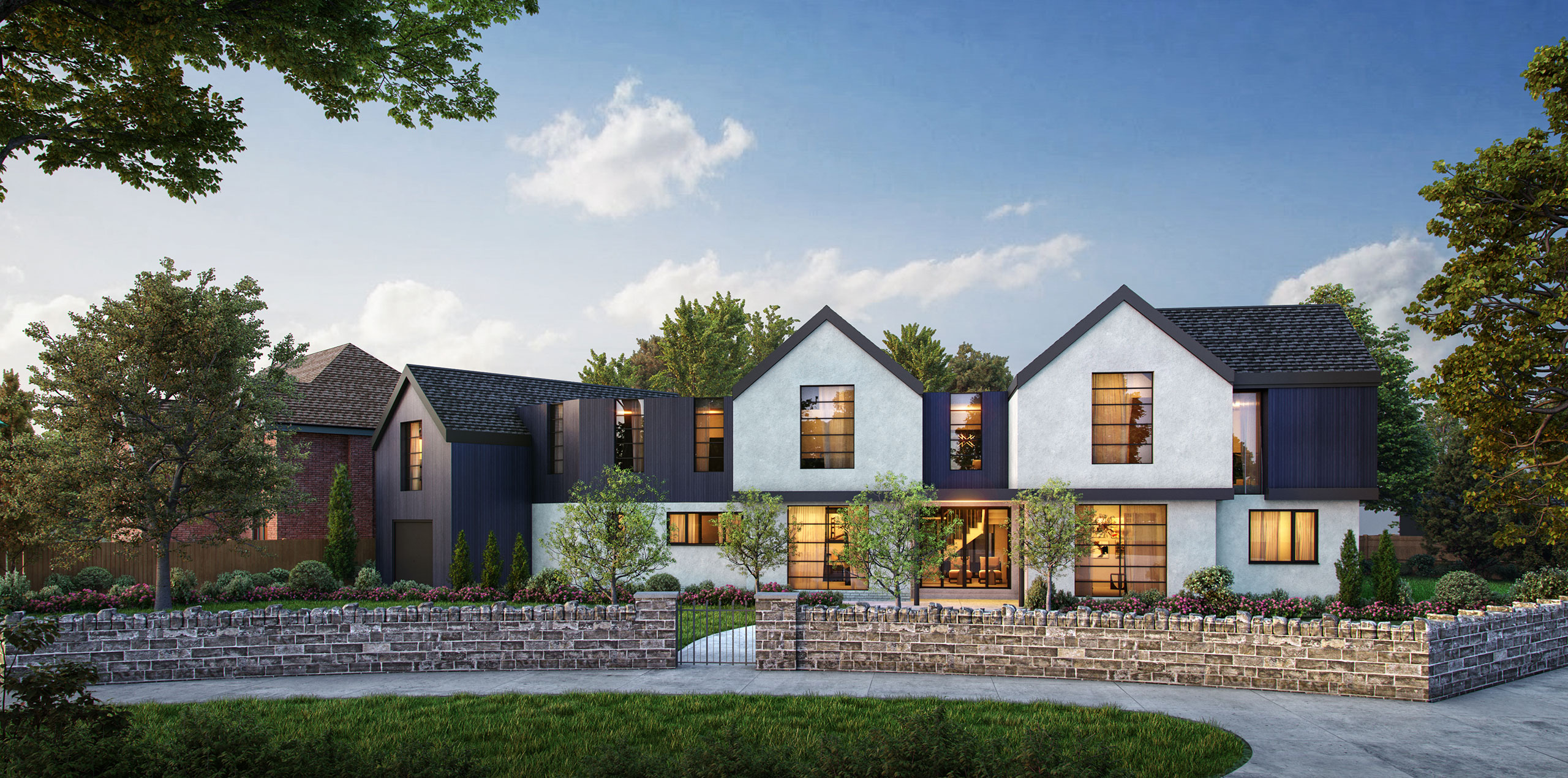
Priory House is a conversion of a bungalow into a two-storey stunning spacious family home in West Bridgford, a residential area in Nottinghamshire.
The Brief
We were appointed to design a spacious home with five generous bedrooms and a large open-plan living space with easy access onto the gardens. This was alongside an office, a cinema room, reading spaces and entertaining areas.
Although the existing plot suited the clients’ requirements, the single story layout did not meet their family’s needs.
The bungalow occupied a commanding corner on one of the most prestigious roads in the area. Earlier applications to demolish the building and create multiple dwellings had been refused due to the prominent location and the style of the designs proposed.
We worked closely with the clients and the planning department to design a striking, contemporary family home which wouldn’t overwhelm adjacent structures. The new property sits harmoniously in the street, retaining a synergy with the adjacent arts-and-crafts style buildings.
Challenges
The local planning authority were highly conscious of the key location of this corner plot, so any development had to be scaled appropriately. We anticipated initial resistance to a two-storey development, so we engaged with planners and liaised with neighbours at the earliest opportunity. This ensured that our proposals were accepted as being in proportion and in keeping with the site.
Working Sustainably
We had to carefully plan our structural strategy due to the additional loads being applied to the existing building. We were able to avoid the need for underpinning, using instead a timber-framed design on the upper floor. This was alongside using individual pad foundations and a steel structure. This also meant we avoided tonnes of concrete being poured into the ground, making this a more sustainable solution.
A New Identity
The strong design features and structure of the existing bungalow had to be carefully unpicked in order to successfully invest the property with its new identity.
The project had two key elevations to consider, each facing a different road. We worked with a neutral palette of charred black timber, white render and glass. This kept the main elevation simple while emphasising other elements to create character and focus.
The proportions of the first floor gables were designed to reference those of the surrounding buildings. The steel-framed glazing and monochrome colour scheme further complemented the existing property.
The internal spaces retain much of the bungalow’s original layout, with new zones carved into the original footprint. The upper floor is accessed by a central feature staircase, and we used the existing spine walls to create a central corridor giving access to each bedroom. We retained the original doorway and created a striking new entrance hall.
Within the open plan kitchen and living space we created discreet activity zones. We included a reading corner and a dedicated relaxing space in the mezzanine above the sitting area.
The result is a contemporary, striking yet harmonious home perfectly designed for a family with growing children.
This prestigious award recognises architectural developments that provide a desirable and sustainable place to live.
Our Feel Good project is a bespoke, residential architectural project on an existing property based in Nottinghamshire. The home had an outdated design, so we extended the property and modified internal and external spaces to give it a new lease of life.
In collaboration with the clients, we designed a modern extension with floor to ceiling glazing. A sequence of terraces and roof gardens were created so that the homeowners could enjoy the various external spaces at different times of day. The new design included many sustainable benefits, latest technologies and positive improvements to the surrounding area.
We are very excited to be shortlisted for this award and are looking forward to the awards dinner which is being held at the Athena in Leicester on Thursday 9th June 2022.